


5 min read
Posted
April 14, 2026
at 2:35 PM ADT
Click here to visit our new markets resource hub for the latest on the evolving trade landscape
Answer a few quick questions about your business and we'll direct you to incentives, programs, and services you may be eligible for.

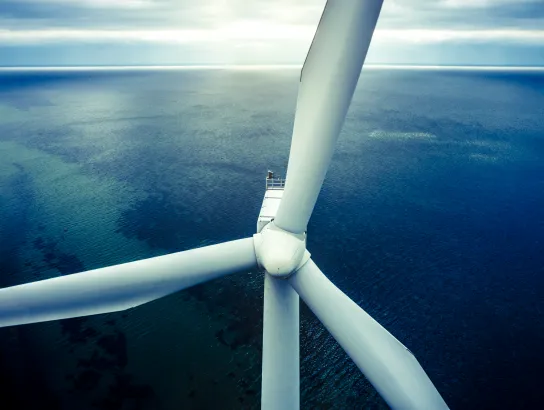
For centuries, the winds off Nova Scotia’s Atlantic coast have shaped its shores. Today, they are shaping something new: a globally competitive offshore wind resource market backed by clear policy direction and growing international interest.
Nova Scotia is advancing toward its first competitive call for offshore wind seabed licences in 2026, with key milestones already achieved and momentum building across the market:
This coordinated progress, combined with strong federal and provincial alignment, is creating a clear and credible pathway to market. It also signals a narrowing window of opportunity for developers looking to establish an early position.
The strength of this opportunity begins with the resource itself. Nova Scotia’s offshore wind speeds rank among the strongest globally, with mean wind speeds typically ranging between 9 and 11 metres per second and capacity factors reaching up to 60 percent.
Favourable seabed conditions and a large continental shelf support fixed-bottom and floating wind technologies, allowing for flexibility in project design and development at scale. With long-term potential exceeding 60 gigawatts, this resource has the capacity to support energy production equivalent to roughly a quarter of Canada’s current electricity demand.
Demand for clean, reliable electricity is accelerating across North America and beyond.
Nearby Quebec and New England are facing significant energy needs. Interest from Hydro Quebec reinforces the opportunity for Nova Scotia to play a role in a broader interconnected system.
Also, agreements with Massachusetts signal how export pathways are beginning to take shape alongside domestic development and global industries are seeking access to stable, low-carbon power. Positioned on the North Atlantic, Nova Scotia also offers direct access to European markets.
Longer-term initiatives, such as Wind West, are also helping define the potential scale of wind development and its role in supporting growing demand for clean energy.
Nova Scotia’s offshore wind supply chain is built on a strong industrial base developed through decades of offshore and marine operations, with proven expertise across logistics, vessel operations, engineering, and fabrication, with more than 50 companies active in directly aligned sectors.
Companies such as Waterford Energy Services, Seaforth Geosurveys, Cherubini Bridges & Structures, and Northgreen Capital, alongside a broader network of ocean technology firms, demonstrate the depth of capability available to support offshore wind development at scale.
What makes this opportunity distinct is timing. As the market takes shape, companies can enter early, establish partnerships, and play a direct role in how the supply chain evolves.
Supported by deep, ice-free ports, established infrastructure, and research capacity through institutions such as Dalhousie University and COVE, Nova Scotia provides the foundation needed to support projects from early-stage development through to long-term operations.
As offshore wind accelerates globally, access to well-defined early-stage markets is becoming limited. Nova Scotia offers a combination that is difficult to replicate: a globally competitive resource, a clear and advancing regulatory framework, and a market where momentum is already underway.
Let's explore how your organization can engage in Nova Scotia’s offshore wind sector.