


8 min read
Posted
January 22, 2026
at 9:00 AM AST
Click here to visit our new markets resource hub for the latest on the evolving trade landscape
Answer a few quick questions about your business and we'll direct you to incentives, programs, and services you may be eligible for.

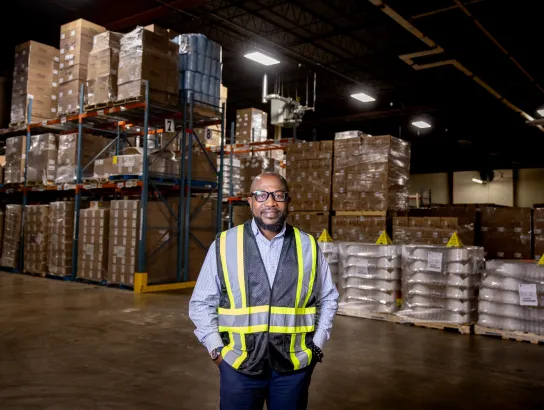
Ernest Korankye didn’t set out to build one of Atlantic Canada’s most diversified logistics companies. More than a decade ago, he was simply trying to solve a recurring problem he encountered while shipping goods overseas.
What he quickly discovered was a fragmented system. Shipping even a single container required coordinating freight forwarders, trucking companies, warehouses, and customs brokers – each adding cost, complexity, and risk.
That frustration became the foundation of what is now Asante Logistic Group, a Truro-based, full-service logistics provider with global reach, extensive warehousing capacity, and a growing role in reshaping how goods move through Atlantic Canada.
“I would say it’s out of necessity,” Korankye says. “A lot of friends and family back home would always ask for things from me. You can easily buy it, but to get it across the Atlantic Ocean to Africa was a tough one.”
Korankye arrived in Nova Scotia to pursue graduate studies at Dalhousie University, eventually completing both a master’s degree and a PhD. At the same time, he continued buying and selling goods internationally. To reduce costs and inefficiencies, he began taking on more of the logistics process himself.
From there, he added warehousing and container stuffing, first in Dartmouth and later in Truro. Vehicles – one of the primary goods being shipped – made the need for space even more pressing.
“Trying to look for parking in Dartmouth was expensive. It was quite chaotic. But Truro provided the opportunity to keep the cars and load them, which was phenomenal.”
At first, Asante handled only Korankye’s own cargo. But word spread quickly and by 2015, the company made a deliberate pivot away from trading and into logistics services exclusively.
By the late 2010s, Asante had become one of the region’s largest vehicle exporters, earning industry recognition and awards between 2016 and 2018. Around the same time, Korankye finished his PhD and faced a defining decision.
“This is a multi-million-dollar business. If I’m going to commit to it, we’re going to have to really diversify.”
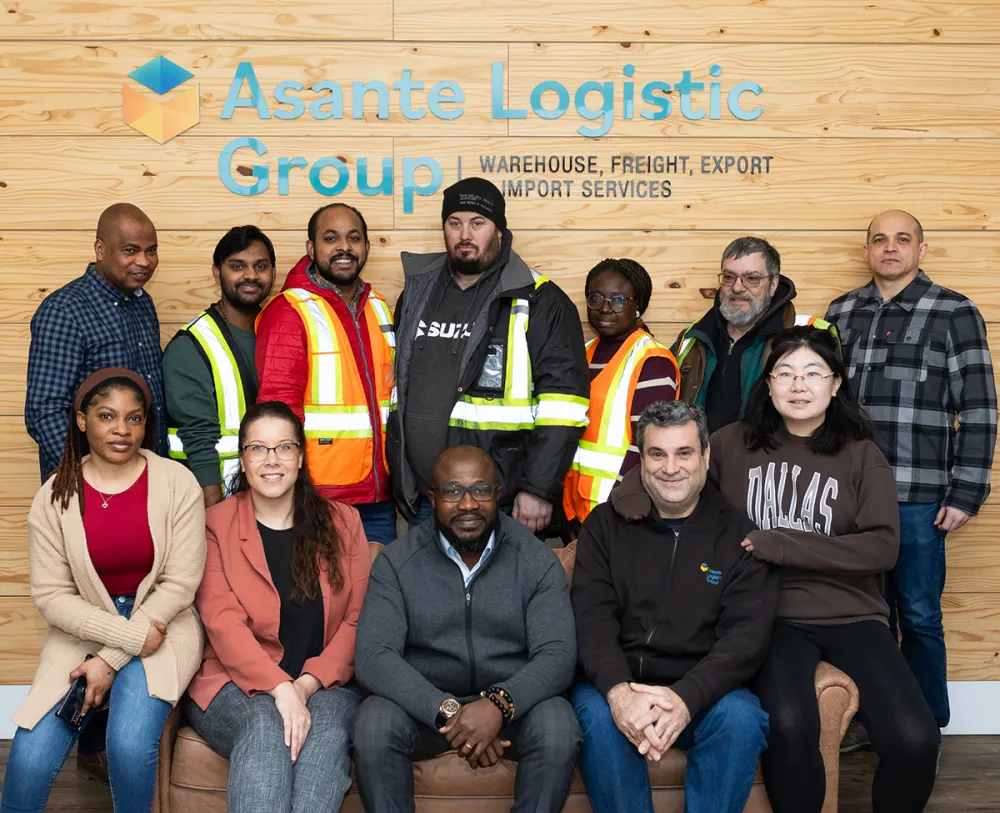
From 2018 onward – particularly through 2020 – Asante expanded aggressively. Warehousing became the anchor service, supported by freight forwarding, trucking, and specialized handling. Today, the company operates what Korankye describes as “the biggest warehouse space in Atlantic Canada in terms of private ownership.”
Asante now runs four core departments, each led by a manager, including freight forwarding, warehousing, transportation, and food logistics.
“It’s grown to be my dream. It’s bigger than the story that I told 12 or 13 years ago.”
From port congestion and regulatory shifts to rapid automation, global logistics has faced unprecedented disruption in recent years. For Asante, staying competitive has required constant investment.
“It’s really about patience and training, as well as capital investment and improving the infrastructure that you have.”
No two customers are the same, particularly in warehousing.
“Not all cargo is palletized. Some are odd shapes. Some are seven feet tall. You have to come up with different ways to store it. Inventory for customers is very important, as is tracking all the cargo in the warehouse and our equipment while they leave the site.”
While Asante’s reach is global, its location is deliberate. Truro sits roughly an hour from the Port of Halifax, close to the Halifax Stanfield International Airport, and near major rail corridors.
“Most of our customers are on the northern side of Nova Scotia. They’re coming through Truro anyway – why not store it here instead of Halifax at a higher cost? It just made sense logistically for us to be in Truro.”
John Kirkup, Asante’s Freight Forwarding Manager, points to rail access as a major advantage.
“We’re very close to Moncton, where CN heads. That’s where the main line into Canada starts,” he says. “Asante already works directly with railcars and sees long-term potential for intermodal growth.”
The company’s position also allows it to serve customers across Atlantic Canada.
“We’re moving cargo from Newfoundland, from PEI, and using both Saint John and Halifax,” Kirkup adds. “We’re an Atlantic-based company.”
Throughout its growth, Asante has worked closely with Invest Nova Scotia, leveraging multiple programs to support expansion and innovation.
Korankye points to the Productivity and Innovation Voucher Program (PIVP) as a catalyst to hire consultants to help the company figure out productivity issues, including what equipment to use, what software, what infrastructure to invest in.
The Trade Market Intelligence (TMI) program played a critical role in Asante’s move into food warehousing.
“The TMI program did about three months of deep dive research and delivered a fantastic report. That research directly informed Asante’s long-term strategy and became part of our 2026 go-to-market strategy.”
Asante has also used Export Development Program (EDP) travel funding to attend international trade shows, including in Brazil.
“The goal is to meet manufacturers already bringing cargo into Canada and show them that there’s a better solution using Canadian ports.”
One of Asante’s most recent initiatives is food logistics – specifically reducing how far food travels inland before reaching Atlantic Canadian consumers.
“Most food comes to Montreal or Toronto and then comes back here,” Kirkup says. “By the time it arrives, three months of shelf life is already gone.”
Asante is changing that by bringing food directly to Halifax, including less-than-container-load (LCL) shipments.
“You don’t have to take a full container,” Kirkup explains. “You can take one or two pallets. That covers more customers.”
The company recently received its first LCL food container from Ghana, marking a significant milestone. The approach opens doors for specialty, organic, and small-scale producers and creates opportunities for retailers, distributors, and even the cruise sector.
Beyond commercial operations, Asante plays an active role in industry education. “Most exporters here are small companies,” Kirkup says. “They don’t have the resources.”
Asante regularly delivers training on Incoterms, CFIA requirements, and export readiness, often in collaboration with Invest Nova Scotia and industry associations.
“Education is key,” Kirkup emphasizes. “We don’t have enough logisticians or freight forwarders in the region.”
Korankye agrees. “Invest Nova Scotia has always been there – through funding, connections, or just helping us explore ideas,” he says. “They’ve been part of almost every milestone.”
Asante Logistic Group continues to plan for growth, including expanded food logistics, infrastructure upgrades, and a broader marketing push. But its long-term vision remains rooted in place.
“There’s no other province I would pick,” Korankye says. “We love it here in Nova Scotia, and I don’t think there’s any plan to change that.”
From a single shipping problem to a global logistics operation, Asante’s journey reflects both entrepreneurial persistence and the strategic advantages of doing business in Nova Scotia.