8 min read
Posted
February 17, 2026
at 9:00 AM AST
Click here to visit our new markets resource hub for the latest on the evolving trade landscape
Answer a few quick questions about your business and we'll direct you to incentives, programs, and services you may be eligible for.

As global demand for protein continues to rise, aquaculture has moved from a niche food source to a cornerstone of the world’s food system. While fish farming is one of the few viable ways to sustainably meet that demand, the industry still grapples with a fundamental problem: a lack of visibility into what fish actually experience beneath the surface.
Sensor Globe, a Halifax-based aquaculture technology company with operations in Norway, is working to change that.
By combining novel sensor design with deep industry insight, the company is helping fish farmers better understand the environmental and operational conditions that directly impact fish welfare, productivity, and farm performance.
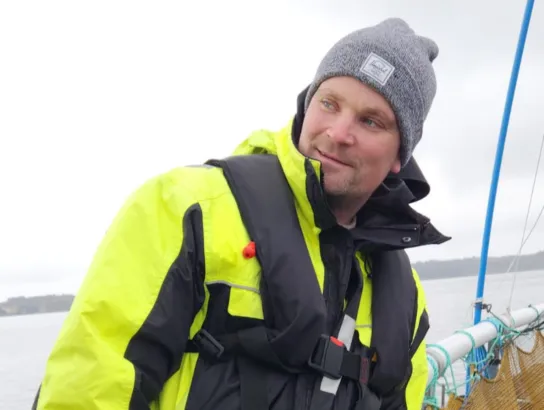
At the center of Sensor Globe’s story is founder and CEO Sheamus MacDonald, whose background in fisheries and aquaculture gave him a front-row seat to the industry’s most persistent, and often overlooked, challenges.
MacDonald’s interest in aquaculture was shaped early by his academic training and professional experience in the sector. While aquaculture is often grouped alongside other forms of agriculture, he’s quick to point out that industrial-scale fish farming is still relatively young.
“There’s more global demand for protein and aquaculture is one of the only ways that we’re going to be able to fulfill that. It’s not a new industry, but with salmon aquaculture for example, it’s relatively new in terms of being industrialized.”
Before founding Sensor Globe, MacDonald had experience growing a company in the fisheries sector. That exposure allowed him to spot problems that were widely accepted but rarely addressed head-on. The more he learned, the clearer it became that fish farmers were operating with blind spots – issues they knew existed but lacked the tools to properly diagnose.
“I like to say it was kind of a rock in their shoe. They knew that the issue was always there, but they didn’t take the time to take their shoe off and kick it out.”
That metaphor became the foundation for Sensor Globe’s mission: give farmers the ability to finally see, measure, and understand what was happening underwater.
The result was the concept for what Sheamus describes as a ‘kaleidospherical’ floating water sensor – a device designed to collect data on both environmental conditions and the experiences of fish within farm systems.
Development began several years ago, with MacDonald and his team working directly with fish farmers from the earliest stages.
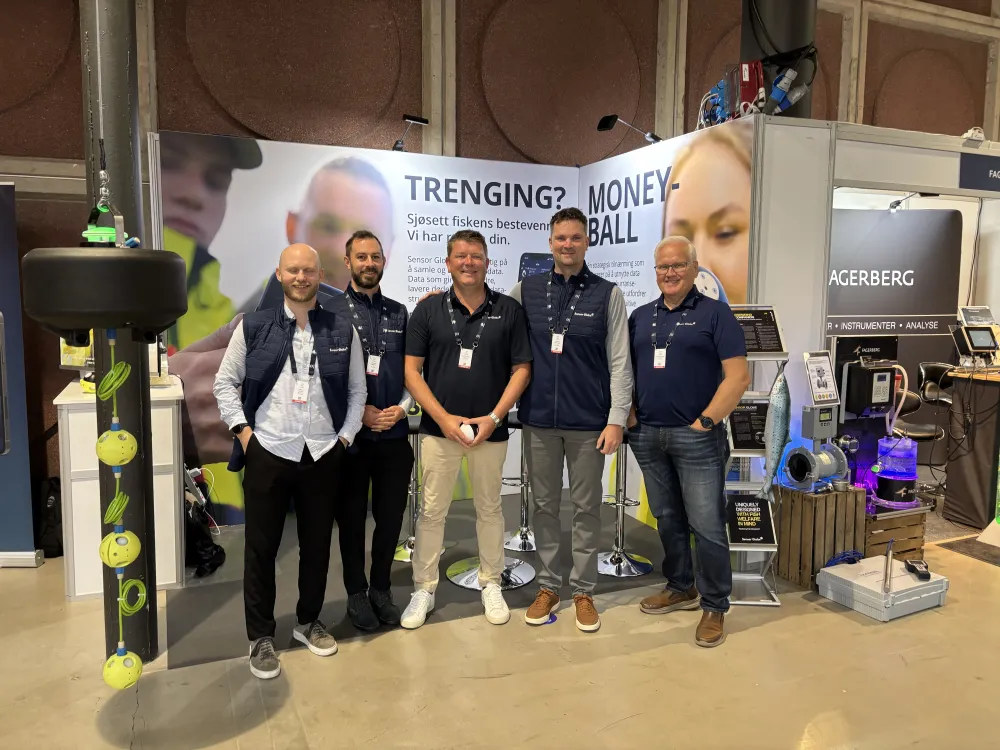
“We started working with fish farmers directly from the early stages here in Canada, but also in Norway. That really helped us better understand the pain point.”
Sensor Globe was co-founded by MacDonald and Aleksandr Stabenow, longtime friends and business partners who shared a common vision for solving challenges in fisheries and aquaculture.
“Like many groups of friends do, they always share ideas. Solving challenges in fisheries and aquaculture was something that resonated for both of us.”
The province’s coastal identity played a major role in shaping the company’s values.
“We know how important it is to our province and also our identity, so that’s where we want to be innovative.”
As the company grew, Sensor Globe adopted an international footprint, with offices in Halifax and Norway – two regions that MacDonald sees as culturally aligned.
“Norway’s very similar to Nova Scotia in terms of the culture and the values. The ruggedness of the rural coast and being resourceful.”
The Halifax team drew talent from Dalhousie University and other local programs, while the Norway expansion connected Sensor Globe directly to one of the world’s most advanced aquaculture markets.
“They bought into the idea in the early stages,” MacDonald says of the Norwegian team. “And they’ve been here with us since the start.”
At its core, Sensor Globe’s technology collects detailed data about the environments fish experience. But the company’s value proposition extends well beyond raw data.
“It’s not necessarily just the environmental data we collect. It’s also how we can optimize our systems, how we can identify distinctions between infrastructure or other technologies they’re using.”
By contextualizing data within real farm operations, Sensor Globe helps farmers understand not just what’s happening, but why it’s happening and what they can do about it. That approach has opened the door to new applications, including one of the company’s most commercially successful tools to date.
One of Sensor Globe’s key industry insights emerged from observing how fish are handled during crowding – a necessary part of treating fish during harvest.
Recognizing an opportunity, Sensor Globe worked closely with farmers to develop the Crowding Companion, a tool built on the company’s existing technology that helps systemize and monitor crowding events.
Today, the Crowding Companion is gaining commercial traction, particularly in Norway, where Sensor Globe is working with some of the largest fish farmers in the world.
“We’re actively scaling out in Norway now,” MacDonald says. “We’re finding new and interesting uses with the data.”
While the product is still evolving, its early success has validated Sensor Globe’s collaborative, farmer-first approach.
“I think we’re only scratching the surface of the potential of the product.”
Sensor Globe’s progress has been supported in part by programs and a $600,000 lead investment from Invest Nova Scotia, which played a key role in the company’s pre-seed fundraising journey.
Invest Nova Scotia’s leading role on diligence and its commitment to invest proved integral to Sensor Globe closing its pre-seed round with significant investments from strategic venture capital firms - Hatch Blue and Tall Grass Ventures.
Hatch Blue invests in innovations along the aquaculture and seafood value chain including next-generation farming systems, regenerative aquaculture, nutrition, enabling technology, health and genetics and alternative seafood. Tall Grass Ventures is an agri-food-focused venture capital firm from Western Canada.
For MacDonald, choosing the right investors goes far beyond securing capital.
“They become an extension of your team. Capital is a necessary requirement but bringing in investors that understand your vision and the product you’re trying to build is critical.”
Experience, connections, and alignment matter, especially at Sensor Globe’s current stage of growth.
“It’s super important to have those conversations early on so that you are aligned. They understand the challenges of being a founder, and you have to understand the other side of the coin.”
“All the programs offered by Invest Nova Scotia teach you different things. It’s not just about the capital resources they provide – it’s access to mentors, advisors, programs, and other tools.”
With much of its early R&D complete, Sensor Globe is now focused on scaling operations and commercialization. The company is already generating revenue, working with major aquaculture organizations, and planning to deepen those relationships.
“First and foremost in 2026, that’s what we plan to execute on. Embedding ourselves as a data solution within their own ecosystems.”
With future fundraising likely on the horizon, Sensor Globe remains open to conversations with partners, customers, and investors interested in the future of aquaculture.
“If there is somebody or a firm that is interested in learning a bit more about our story,” MacDonald says, “we’re an open company.”
In an industry where so much happens out of sight, Sensor Globe is helping bring clarity underwater – one data point at a time.