


6 min read
Posted
December 12, 2025
at 12:00 PM AST
Click here to visit our new markets resource hub for the latest on the evolving trade landscape
Answer a few quick questions about your business and we'll direct you to incentives, programs, and services you may be eligible for.

There’s an old saying in business: timing is everything. And right now, the timing couldn’t be better for Nova Scotia.
We are entering a new industrial era driven by biology. Around the world, people are demanding more sustainable products, governments are pushing for cleaner industries, and investors are looking for companies that can help reduce carbon emissions.
This global shift is known as the bio-revolution, and Nova Scotia has quietly become one of the places leading the way.
Industrial biotechnology may sound technical, but the idea is simple: companies use biology – things like microorganisms, natural materials, and fermentation – to create everyday products. These products include biodegradable plastics, cleaner chemicals, advanced textiles, and even new kinds of food.
This isn’t a small trend either. According to a major report from the McKinsey Global Institute, the bio-revolution could create $2 trillion to $4 trillion in direct economic impact annually within the next 10 to 20 years.
Why such huge growth? Several forces are converging:
In many ways, biotech today is where the chemical industry was in the early 20th century – on the edge of transforming everything from how we make clothing to how we produce food.
Some examples include:
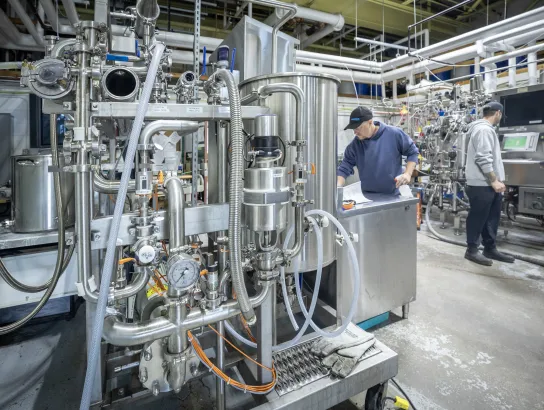
A big part of Nova Scotia’s success comes from collaboration. The province’s growing industrial biotech sector is anchored by AscendBio, a partnership between The Verschuren Centre and Invest Nova Scotia. Together, they’ve developed assets and built an environment where start-ups can grow faster and more cost-effectively than they could on their own.
Over the past five years, AscendBio has supported more than 50 industrial biotech companies, making Nova Scotia home to one of the fastest-growing biotech hubs in Canada.
What makes Nova Scotia so appealing?
In other words, Nova Scotia offers a unique combination of talent, infrastructure, and support that helps companies grow faster, smarter, and more sustainably.
One of the most exciting aspects of industrial biotech in Nova Scotia is that its impact is not confined to urban centres. Many of the most significant opportunities are emerging in rural communities, where traditional “waste” streams have become critical inputs for next-generation manufacturing.
Materials such as lobster shells, forestry residue, seaweed, agricultural by-products, and food waste – once treated as liabilities – are now strategic assets in the deployment of transformational biotechnologies.
By anchoring production close to these distributed feedstocks, industrial biotech enables value creation directly within rural regions, strengthening local supply chains, supporting year-round employment, and increasing resilience in resource-based economies. This represents a fundamental shift in how rural economies participate in innovation: not as peripheral suppliers, but as core hubs of production, investment, and technology deployment.
This transformation is based on a simple concept: valorization.
Valorization means taking something that previously held little or no economic value and turning it into high value smart chemicals and materials. For example:
From fisheries and forestry to agriculture, this shift is offering new possibilities for rural industries by building a whole new industry linking commodity coproducts to manufacturing, health and environmental sustainability and reducing waste sent to landfills.
Since industrial biotech often relies on local feedstocks, many companies naturally locate their operations close to the communities that supply those materials. This means:
Nova Scotia’s combination of natural resources, research capacity, and practical industry experience has made it an ideal testing ground for companies working on the next generation of sustainable products. As more organizations discover Nova Scotia’s advantages, the biotech cluster continues to grow, bringing even more skills, investment, and opportunity into the region.
Want to learn more? Connect with Paul Richards or visit our AscendBio program page.