


4 min read
Posted
April 21, 2026
at 11:06 AM ADT
Posted by
Click here to visit our new markets resource hub for the latest on the evolving trade landscape
Answer a few quick questions about your business and we'll direct you to incentives, programs, and services you may be eligible for.

Canada boasts one of the world’s largest mining industries. It generates tens of billions of dollars for the country each year through the extraction of iron ore, gold, nickel, copper and many other materials.
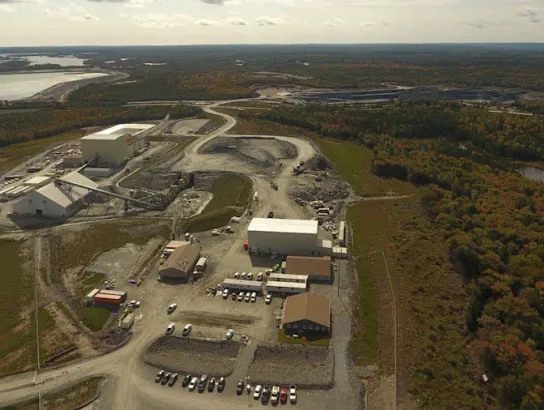
The same cannot be said, however, for Nova Scotia. In 2023, one of the last mining operations in the province, the Touquoy gold mine in Moose River, ceased operations earlier than expected when its operator, Australia-listed St Barbara, failed to secure permission to deposit tailings into an open pit prior to processing.
Dustin O’Leary, the company’s business development manager, acknowledges it has had “a complex relationship” with provincial authorities at times. The early closure of Touquoy marked a nadir. “The unfortunate part was there was a lot that had been extracted that we couldn’t process,” he says.
In early 2025, however, the provincial government — grappling with a sluggish economy and the impact of US tariffs — made a “pivot” to attract mining investment, says Janice Zinck, executive director for geoscience and mines at Nova Scotia’s department of natural resources.
“There’s a role to play for natural resource development,” she says. “But we had to do some things in order to put us on that course.”
The provincial government has identified 20 “critical minerals” that could be mined in the province. For now, the main focus is on four strategic subsectors: gold, gypsum, aggregates and potash.
There have been no drastic changes to mining legislation, other than the lifting of a moratorium on uranium mining. Instead, the government has focused on being more responsive and Zinck says it has already halved the time required to receive a permit.
The rapid change in the government’s approach to mining has come as a pleasant surprise to companies.
St Barbara had intended to divest its remaining licences in Nova Scotia, but has performed an about-turn. It is now applying to restart operations at Touquoy to complete the processing of the deposits already extracted and plans to open several new open-pit operations, alongside a processing facility.
Larger players are also casting a curious eye towards Nova Scotia. Rio Tinto quietly secured exploration licences for lithium last year.
Another company, Toronto-headquartered NexGold, hopes to begin preliminary construction activities for a gold mining project at Goldboro by the end of this year, before beginning production in late 2028.
Deidre Puddister, its vice-president for sustainability, says Nova Scotia did not have a “friendly reputation” until recently. “People were saying you’re just going to beat your head against the wall there.”
NexGold faced a years-long “uphill battle” in securing permits, she says. But since premier of Nova Scotia Tim Houston put a mining revival at the centre of his agenda, Puddister says officials have become much more proactive in helping mining companies move projects forward.
The result is a clear shift in sentiment. “We’re proud to be working in Nova Scotia,” says Puddister. “A couple of years ago, it was a source of frustration. Now it’s a source of pride.”
Connect with Heather Hennigar, Investment Attraction Executive.