


6 min read
Posted
May 26, 2026
at 12:00 PM ADT
Click here to visit our new markets resource hub for the latest on the evolving trade landscape
Answer a few quick questions about your business and we'll direct you to incentives, programs, and services you may be eligible for.

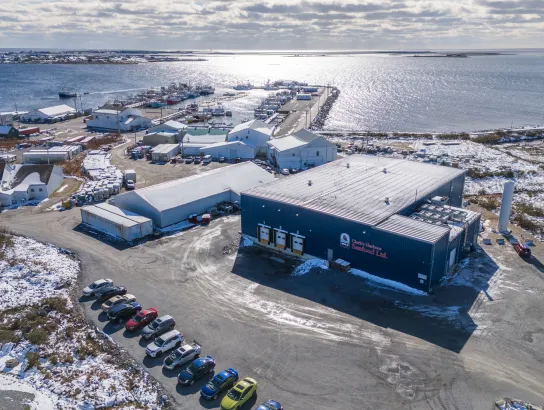
Clark’s Harbour has long been synonymous with lobster fishing. Located on Nova Scotia’s southwestern tip, seafood is more than an industry. It is the backbone of the local economy, a multi-generational livelihood, and a way of life.
Today, Clark’s Harbour Seafood is building on that tradition. What began primarily as a live lobster operation has evolved into an integrated seafood business with global ambitions.
The company now operates alongside sister companies Atlantic ChiCan Seafood and Stoney Island Fisheries under shared ownership, creating a vertically integrated supply chain that spans harvesting, holding, processing, storage, and export.
According to Karianne Malone, Associate Director of Business Development at Clark’s Harbour Seafood, owner Jim He’s family purchased Atlantic ChiCan Seafood (formerly GM Newell) in 2013. Jim assumed management of the company in 2016 and later acquired what is now Clark’s Harbour Seafood. Under his leadership, the company’s growth and evolution accelerated significantly beginning in 2019.
“Back in 2019, Clark’s Harbour Seafood was focusing on live lobster exports, purchasing direct from the fishing boats, and holding for long-term storage,” Malone explained.
That focus changed quickly. In 2021, the company began construction of a processing facility aimed at diversifying beyond the live lobster trade.
Today, Clark’s Harbour Seafood produces a growing range of frozen and ready-to-eat seafood products including cooked lobster meat, raw lobster tails and frozen lobster bodies.
“Just this year, we expanded into snow crab processing as well.”
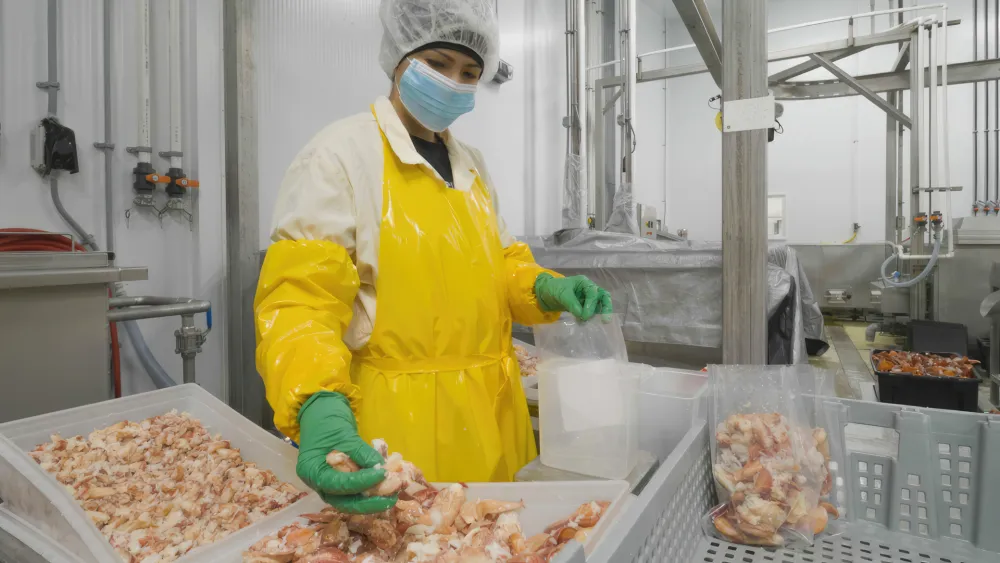
Behind the scenes, Clark’s Harbour Seafood’s sister companies play critical supporting roles. Atlantic ChiCan Seafood continues to focus on live lobster exports, while Stoney Island Fisheries manages product sourcing, long-term storage, and logistics support. The company recently expanded its infrastructure by constructing new cold storage facilities, allowing more product to remain in Nova Scotia rather than relying on U.S.-based storage facilities.
“We had to ship and store product in the U.S. based on our lack of holding space capacity. So instead of shipping to the U.S. and having those storage fees, we just decided Stoney Island has the space, so let’s make a cold storage facility within the company.”
The company’s processing division also led to the launch of Wild by Nature, a premium lobster brand focused on retail-ready products and consumer convenience. Positioned around sustainably sourced North Atlantic lobster, the brand reflects Clark’s Harbour Seafood’s broader shift toward value-added seafood products designed not just for wholesalers, but for consumers and retailers worldwide.
As the company expanded its processing capabilities, it also began aggressively pursuing international market development. That is where Invest Nova Scotia’s Export Development Program (EDP) and attending both domestic and international trade shows have become a cornerstone of that strategy.
“When we first started the process, the company didn’t have a market because we didn’t know the market. Going to these trade shows has helped our brand reputation grow.”
With EDP support helping offset travel and participation costs, Clark’s Harbour Seafood significantly expanded its trade show strategy. In the past year alone, company representatives attended events in Dubai, Japan, Barcelona, Montreal, Boston, Las Vegas and New York.
“Being on the ground at trade shows is about more than just selling your products. You’re surrounded by leaders from all areas of the food industry – food service, retailers, distributors, wholesalers, or direct consumers. Those face-to-face interactions give you real-time insight into what’s trending, what’s missing in the market, and where opportunities exist, which helps us stay innovative and competitive.”
Malone said the support from Invest Nova Scotia extended well beyond financial assistance.
“Being able to work with Invest Nova Scotia gave us direct contacts with buyers. We met so many different trade commissioners and reputable companies that are directly interested in our products.”
Trade shows have become critical for helping Clark’s Harbour Seafood understand customer behaviour, purchasing cycles and distribution channels in different regions. While international expansion has created new opportunities, it has also introduced new challenges. Malone noted that learning unfamiliar markets remains one of the company’s biggest hurdles, particularly as global events and geopolitical instability continue to affect seafood trade patterns.
“Global factors always throw a wrench into different situations. But for the most part, we can work around it.”
As the company continues expanding internationally, Malone strongly encourages other Nova Scotia exporters to take advantage of trade show opportunities whenever possible.
“Trade shows give you the chance to connect with Canadian Trade Commissioners, whose local knowledge and support can make it much easier to start doing business in a new country or region. It could be a risk, but in the long run, even though it could be a slow gain, it’s still a gain.”
And sometimes, she added, all it takes is one strong connection.
“You never know – it really only takes one buyer to make a show successful.”
Could your business be Nova Scotia’s next success story? Reach out to the Regional Business Development Advisor nearest you.