


5 min read
Posted
October 28, 2026
at 9:00 AM ADT
Click here to visit our new markets resource hub for the latest on the evolving trade landscape
Answer a few quick questions about your business and we'll direct you to incentives, programs, and services you may be eligible for.

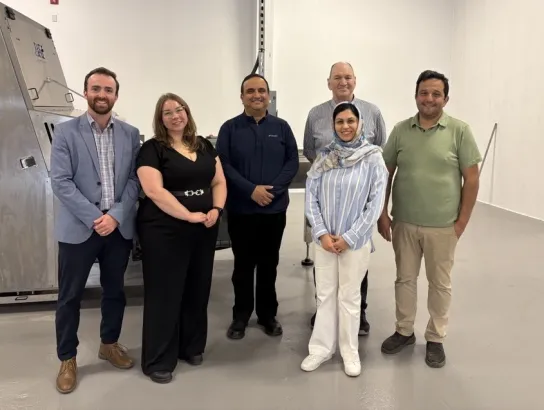
When Hesam Shahravan talks about bread, it isn’t just about food. For the founder of Halifax Bread Factory, bread is culture, chemistry, business and, increasingly, a way to put Nova Scotia on the map.
For Shahravan, Invest Nova Scotia's support was particularly important during the transformation of a former transport terminal in Burnside into what he describes as one of Nova Scotia's largest bread-production facilities. To help with the project, the company accessed Invest Nova Scotia's Export Development Program and Innovation Rebate Program.
“With construction taking several months longer than expected and costs changing along the way, the support helped us manage."
The result is a modern production facility designed to serve customers in Nova Scotia and beyond. The company is already selling under the Halifax Bread brand in Nova Scotia and New Brunswick, while exploring opportunities elsewhere in Canada and potentially international markets.
But the story of how Shahravan arrived at this point starts much smaller.
Shahravan immigrated to Canada in 2002 and went directly to York University, where he studied chemistry before completing a PhD at the University of Toronto in 2010. His wife had moved to Nova Scotia earlier and studied graphic design at NSCAD.
After teaching chemistry at the University of Toronto, Shahravan and his wife decided to move to Nova Scotia in 2014 for a fresh start. Their original idea was to open an ethnic bakery.
"We love bread. It's in our culture.”
But they quickly discovered a larger immediate market for everyday breads, such as toast, loaves and similar products.
The bakery opened to the public in February 2018. By July, the outlook was bleak.
"We realized that unless a miracle happened, we'd have to shut down soon," Shahravan and wife recall. "We couldn't even make rent."
Then came a phone call from Mic Mac Tavern, looking for a new supplier for their garlic bread. The initial request was for a regular weekly supply of 1,200 slices.
That order became a turning point. The relationship has continued for years, and Shahravan credits the restaurant with helping the bakery survive long enough to grow.
"If it wasn't for Mic Mac Tavern, there would be no Halifax Bread Factory."
Word of mouth brought more customers. Then COVID-19 dramatically increased demand. By 2021, the original bakery, at only 5,000 square feet, was no longer large enough.
The company began looking for a larger facility and eventually purchased its current Burnside site: a 6.2-acre property with a 20,000-square-foot building.
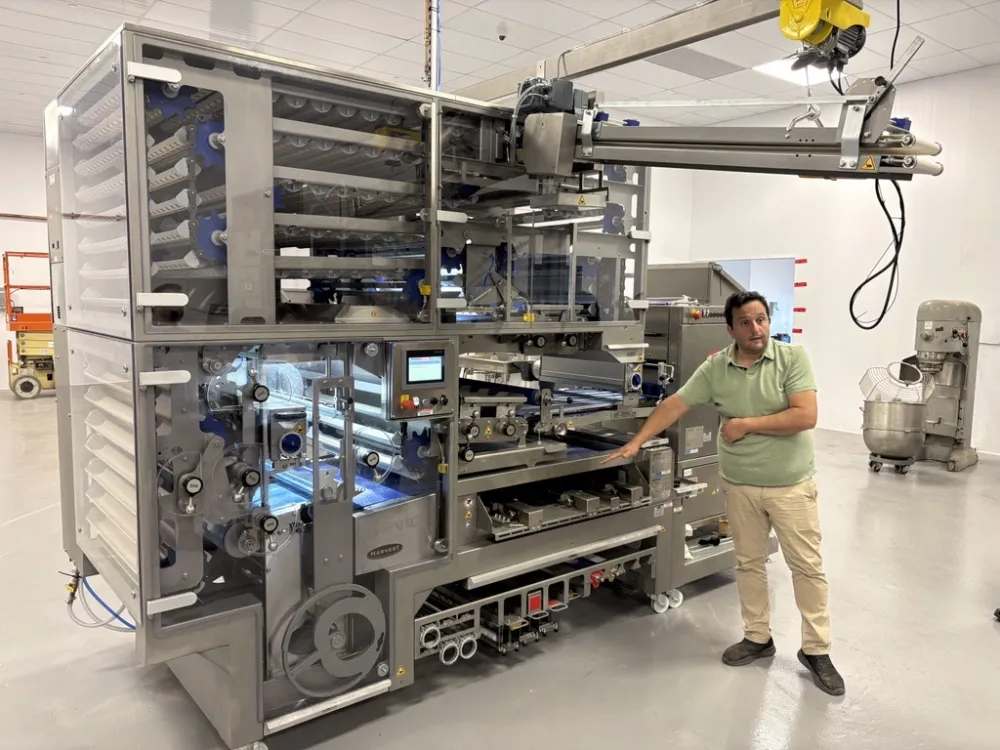
The building required an extensive transformation before it could become a food-production facility. The company rebuilt it from the inside, upgrading power and natural gas, installing new sprinkler, security and drainage systems, replacing surfaces with food-grade materials and adding HVAC and ERV systems to maintain consistent production conditions.
Shahravan saw an opportunity to strengthen Atlantic Canada's bread supply by producing more bread locally, reducing reliance on products shipped in from other provinces.
The new facility is designed for flexibility rather than maximum automation. It can produce different sizes and products for individual customers, with precise portion control and the ability to accommodate special dietary requirements.
That approach is intended to open doors to B2B customers, including food chains and institutional buyers.
The company's growth strategy also extends beyond Nova Scotia. Halifax Bread Factory already has an established buyer in Ontario, and sees opportunities to expand its reach into other Canadian markets.
The current facility is being positioned as the first stage rather than the final destination.
For the first year or two, the company expects to focus primarily on B2B sales. If demand grows sufficiently, a fully automated bread line could eventually be added.
In the future, the company is also considering a second facility nearby. The existing building could eventually take on another important role: training. That would extend the impact of the bakery beyond bread production into workforce development and training for the wider sector.
For a business that nearly closed its doors just months after opening, the journey has already been dramatic. For Shahravan, however, the expansion remains deeply connected to the province and the country that gave the company its start.
"I've lived in Canada longer than I lived in Iran, so I consider myself more Canadian than anything else. This is where we live. This is where we enjoy living. And I'm so happy that I made the decision to move here."
Could your business be Nova Scotia’s next success story? Reach out to the Regional Business Development Advisor nearest you.